The Blue Secret of Ría Lagartos: La Cacerolita de Mar and Its Link to Human Health
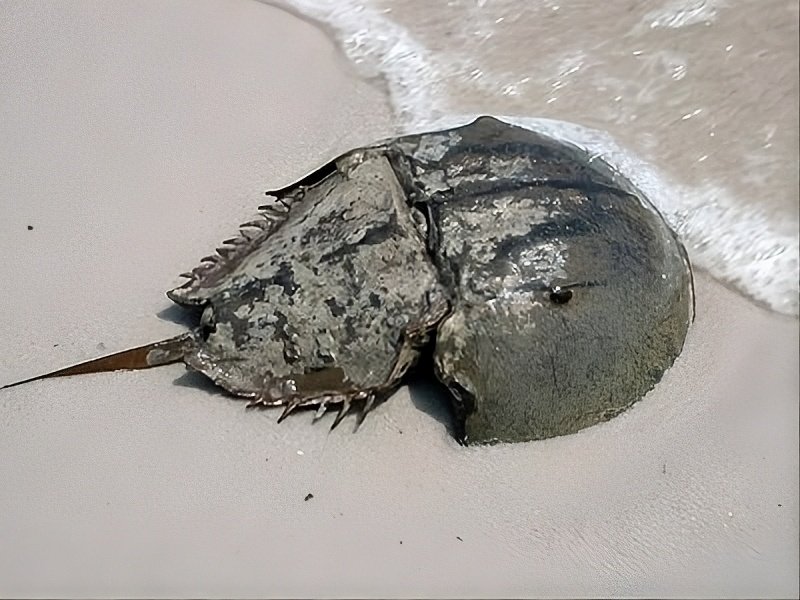
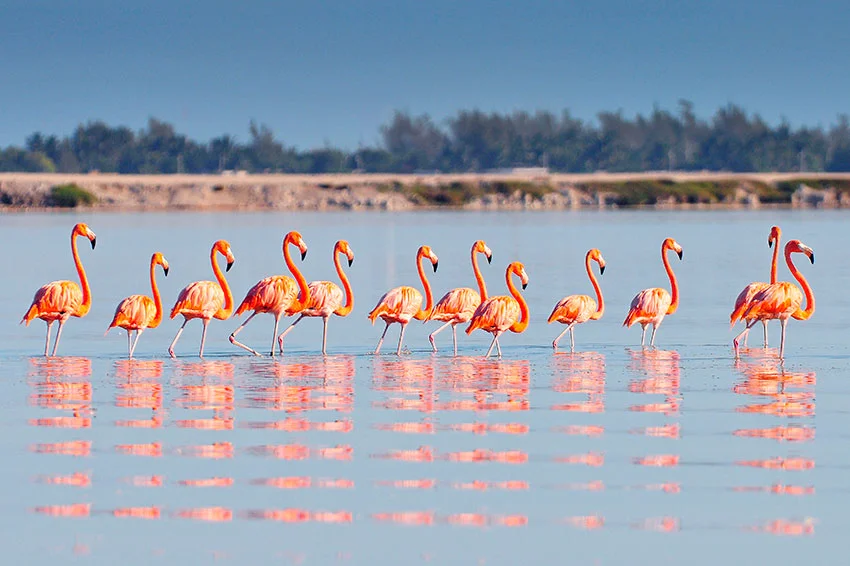
When we think of Ría Lagartos, it's easy to be dazzled by the intense pink of the flamingos and the imposing presence of crocodiles. However, in the muddy and sandy bottoms of our Biosphere Reserve lives a silent creature that has survived multiple mass extinctions and, today, is an indispensable pillar for modern medicine worldwide.
We are talking about the horseshoe crab (Limulus polyphemus), an animal that defies time and reminds us that the conservation of Mexican wetlands has direct implications for human survival.
A 450-Million-Year Survivor
Despite its common name in Spanish (cacerolita de mar) or in English (horseshoe crab), this fascinating marine arthropod is not really a crab. Phylogenetically, it is much more closely related to modern arachnids, such as spiders and scorpions.
Its anatomical design has been so successful in evolutionary terms that its physical structure has barely changed since the Ordovician period, hundreds of millions of years before dinosaurs walked the Earth. That is why the scientific community calls it a "living fossil."
In Mexico, populations of this species are restricted almost exclusively to the coastal waters and estuaries of the Yucatán Peninsula, with the Ría Lagartos region being one of its most important and studied refugia.
Blue Blood: LAL and Modern Medicine
The most impactful and scientifically documented biological aspect of Limulus polyphemus is its blood. Unlike vertebrates who use hemoglobin (iron-based) to transport oxygen, the horseshoe crab uses hemocyanin, a copper-rich protein that gives its blood a distinctive pale blue color.
But the true biotechnological value lies in its immune cells, known as amebocytes. From these cells, a compound called Limulus Amebocyte Lysate (LAL) is extracted.
- LAL is extremely sensitive to bacterial endotoxins.
- Upon contact with bacterial contamination (even in minute quantities), LAL reacts by forming an almost instant clot, isolating the threat.
- The global pharmaceutical industry relies on this test. Before any vaccine, intravenous medication, or medical device (such as a pacemaker or surgical instruments) is approved for human use, it must be tested with LAL to guarantee it is 100% free of deadly bacteria.
Official Documentation: Its Conservation Status in Mexico
Since the horseshoe crab is crucial both for medical science and wetland equilibrium, the Mexican government has strict documentation for its protection.
| Document / Institution | Official Status | Legal and Ecological Implications |
| NOM-059-SEMARNAT-2010 | (P) Endangered | Species whose distribution areas have drastically decreased. Its capture, damage, or trade in Mexico constitutes a federal crime. |
| CONANP (Management Plan) | Indicator Species | Considered vital for evaluating the health of the benthos (aquatic bottom) in the Ría Lagartos Biosphere Reserve. |
| CONABIO | Priority Species | Subject to population monitoring due to its genetic isolation from North American populations. |
Unlike the United States, where there is a regulated biomedical industry that captures these animals to extract a percentage of their blood and then releases them, in Mexico the species faces different threats. Here, the main risk is habitat loss due to unregulated coastal development and the alteration of the beaches where they spawn.
The Ecological Connection in the Wetland
The conservation of the horseshoe crab in Ría Lagartos goes beyond human biotechnology; it is the driving force behind one of the largest migrations on the planet.
During the spawning season (spring and summer), horseshoe crabs emerge from the estuary on full or new moon nights, taking advantage of high tides to deposit millions of tiny eggs in the sand. These eggs are rich in lipids and proteins, becoming the vital fuel for thousands of migratory shorebirds. Without this massive and synchronized energy source, many of these birds, like the Red Knot (Calidrus canutus), would not have the fat reserves needed to continue their exhausting flight from the Arctic to Patagonia.
Official Sources to Learn More
For students, researchers, or curious travelers who wish to delve deeper into the real data behind this species and its management in Ría Lagartos, we suggest exploring the following public documentation:
- Diario Oficial de la Federación (DOF) – NOM-059-SEMARNAT-2010: The legal governing document of the Mexican Government that lists wild flora and fauna species in risk categories.
- Conservation and Management Program of the Ría Lagartos Biosphere Reserve: Official document published by the Secretariat of Environment and Natural Resources (SEMARNAT) and CONANP, which details the wetland zoning and specific strategies for the recovery of Limulus polyphemus nesting beaches.
- EncicloVida (CONABIO: Mexican scientific database where historical and current distribution maps can be consulted, as well as academic articles on the genetic divergence of the Yucatán horseshoe crab population relative to US Atlantic populations.