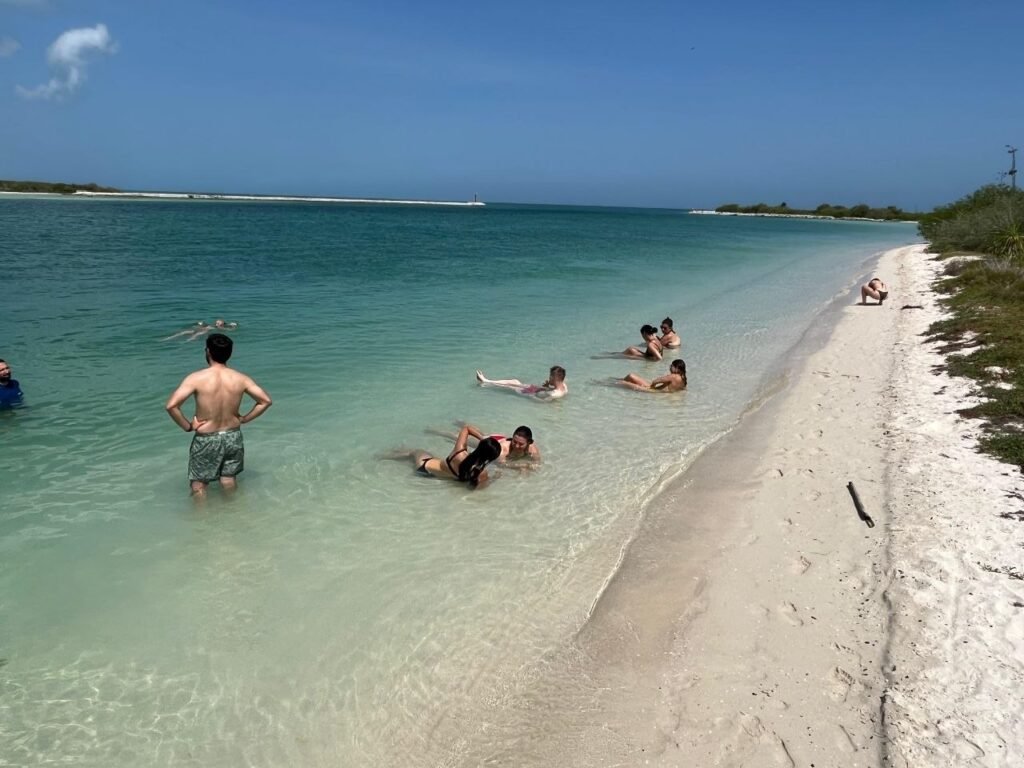
Ría Lagartos: A Biodiversity Treasure. The Ultimate Guide to Its Wildlife and How to Experience It.
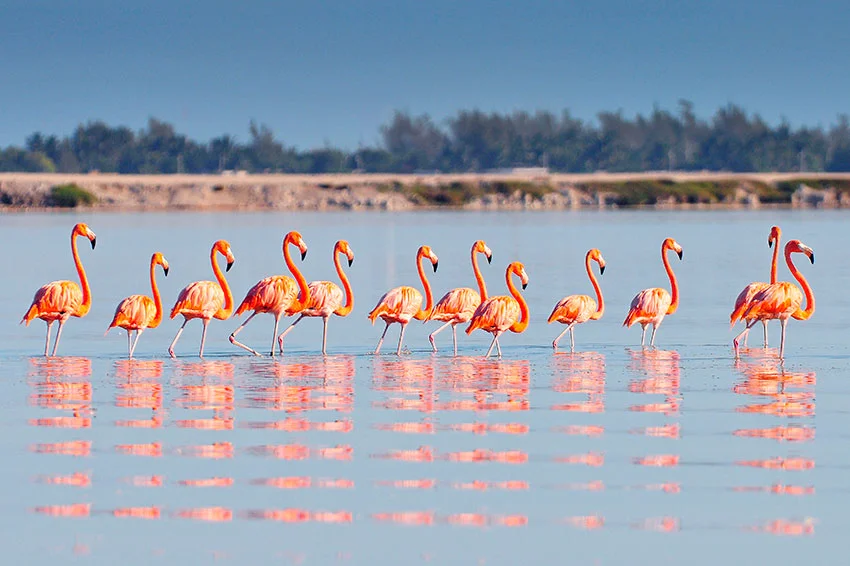
When you hear «Ría Lagartos», your mind immediately flies to an image: thousands of flamingos painting the horizon in a vivid pink. And while this spectacle is undoubtedly one of Mexico's natural wonders, it's just the first chapter of a much deeper and complex biodiversity story.
Here at Rio Lagartos Experiences, we've dedicated our lives to navigating and understanding this place. It's not just a tourist destination; it's one of the most crucial Biosphere Reserves of the peninsula, designated by UNESCO, and a wetland of international importance under the Ramsar convention.
Here, fresh water from underground cenotes meets the salt water of the Gulf of Mexico, creating a mangrove estuary that's a cradle of life. We want to take you beyond the postcard and show you the wildlife that depends on this ecosystem, as noted by the institutions that protect it, like Mexico's National Commission of Natural Protected Areas (CONANP).
This is a guide to what you can find, and more importantly, how you can experience it through our expeditions designed for true nature lovers.
The Emblem of the Ría: The American Flamingo (Phoenicopterus Ruber)
It's impossible not to start with the icon. Ría Lagartos hosts the largest nesting colony of the American Flamingo in Mexico. What many don't know is that their spectacular coloration isn't innate; they acquire it.
These waters are rich in a small crustacean called Artemia salina (brine shrimp), which in turn feeds on microalgae rich in carotenoids. By consuming these crustaceans, flamingos assimilate the pigment, dyeing their feathers. A pale flamingo is often a young flamingo or one that hasn't fed well.
How to Experience It:
Seeing them is easy, but observing them responsibly is key. Our guides on the Experience Tour will take you to the feeding zones by boat, maintaining the distance stipulated by CONANP so as not to disrupt their behavior.
For those passionate about capturing the perfect moment, our Photography Tour is designed with patience in mind. We give you 4 hours on a private boat, seeking the best light at dawn or dusk and waiting for the birds to give us their best angle.
A Global Sanctuary for Birds (Beyond the Pink)
If you're a birdwatcher, Ría Lagartos is your paradise. According to the CONANP Management Program and the Ramsar Information Sheet, over 330 bird species have been recorded in the reserve (333 in total: 177 residents, 142 migrants, and 14 resident-migratory).
This ría is a vital point on the Mississippi Flyway, serving as a crucial rest and feeding area for thousands of birds traveling from Canada and the United States to South America.
On our tours, we can spot:
- Majestic Residents: The elegant Roseate Spoonbill (Platata ajaja), which filters water with its unique bill; the enigmatic Tiger Heron (Tigrisoma mexicanum), a master of camouflage; and the Boat-billed Heron (Cochlearius cochlearius) with its penetrating eyes.
- Raptors: The Osprey (Pandion haliaetus) is a common sight, diving to catch fish with impressive precision.
- Migratory Giants: In winter, the ría fills with huge groups of American White Pelicans (Pelecanus erythrorhynchos), which contrast with our resident Brown Pelican (Pelecanus occidentalis).
How to Experience It:
For the casual visitor, the Naturelovers Tour offers a fantastic introduction to this diversity. But for the serious enthusiast, our Birdwatching Tour is the only option. We depart at strategic times (early morning) with specialized guides who identify birds not just by their plumage, but also by their song, ensuring a sighting list that will exceed your expectations.
The Ancient Guardians: Crocodiles and Living Fossils
The name «Ría Lagartos» isn't a metaphor. This ecosystem is home to two crocodile species: the Morelet's Crocodile (Crocodylus moreletii) and the American Crocodile (Crocodylus acutus).
These apex predators are ecosystem engineers; their presence is an indicator of the ría's health. During the day, it's common to see them basking on the shores to regulate their temperature.
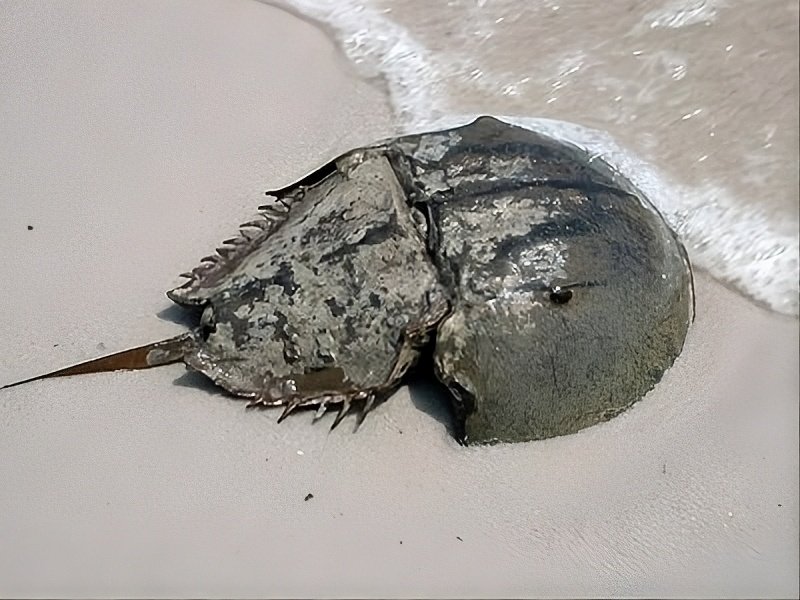
But the ría holds more secrets. In its waters lives the Atlantic Horseshoe Crab (Limulus polyphemus). This arthropod isn't a real crab, but a «living fossil» more closely related to spiders and scorpions, that has remained virtually unchanged for 450 million years.
How to Experience It:
Seeing a crocodile by day is impressive. Finding it at night is a transformative experience.
Our Nocturnal Crocodile Tour is an adventure unlike any other. We navigate the ría in darkness, searching with flashlights for the red glow of their eyes (an effect called tapetum lucidum). It's an expedition that sharpens all your senses, where you can also witness bioluminescence in the water and a starry sky like few have seen.
Why the Experience Matters: The Riolagartos Experiences Seal
Ría Lagartos is a protected treasure. Visiting it comes with responsibility. We aren't just a tour company; we're nature interpreters and conservation partners.
Choosing Riolagartos Experiences means choosing:
- Certified Local Guides: We were born here. We know the tide cycles, the winds, and the secret spots that only local experience can teach. We're certified and follow CONANP guidelines.
- Responsible Tourism: We never harass the wildlife. We practice passive observation, ensuring our presence doesn't alter the animals' natural behavior.
- Real Experiences: We don't just take you to see; we take you to understand. We'll explain why the mangrove is vital, how the «Coloradas» are formed, and what role each species plays.
Don't settle for a superficial visit to this sanctuary. Let us show you the Ría Lagartos that we love and protect.
Visit our official Tours in Ría Lagartos page and book an expedition you'll remember forever.
Institutional References
For those interested in delving deeper into the scientific importance of this area, we recommend consulting the official sources:
- CONANP (National Commission of Natural Protected Areas):Information Sheet and Management Program for the Ría Lagartos Biosphere Reserve. Details priority species and conservation rules.
- Web reference: https://www.gob.mx/conanp (Check the Protected Areas section).
- UNESCO (United Nations Educational, Scientific and Cultural Organization):Directory of the Man and the Biosphere Programme (MAB), where Ría Lagartos was designated as a Biosphere Reserve in 1986.
- Web reference: https://en.unesco.org/biosphere/lac/ria-lagartos
- Ramsar (The Convention on Wetlands):Ramsar Site Information Sheet No. 333 "Ría Lagartos Biosphere Reserve", highlighting its international value as a waterbird habitat.
- Web reference: https://rsis.ramsar.org/ris/333
- CONABIO (National Commission for the Knowledge and Use of Biodiversity):Platforms like EncicloVida and AverAves, where you can check the species lists registered for the Ría Lagartos region.
- Web reference: https://enciclovida.mx/